

-=
 NEWS  MEDIA  GIVING
Click here for important vaccination information
 
The Next 100


Student Health Center

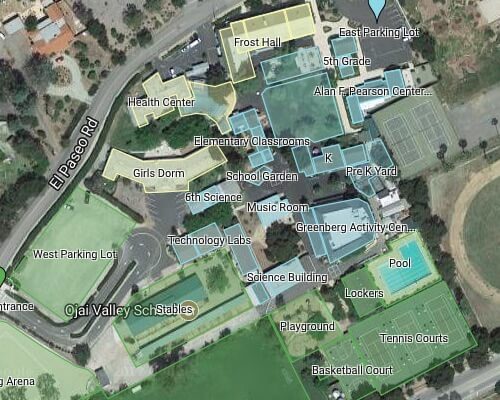
There are Student Health Center locations on both the OVS Upper and Lower Campuses. The Health Center at Upper Campus is located in room 213 of the girls’ dormitory. It contains a locked medical cabinet, desk and couch. This serves as a place for triage, assessment, treatment and therapy appointments. If the Nurse determines that a student is too sick to attend classes, he/she will be sent to his/her dorm room to rest, or be brought down to the Lower Campus Health Center for observation. In any case, the Dorm Parent on duty and Front Office are notified of the student’s whereabouts.

The Health Center located on Lower Campus is the larger of the two and contains most of the medical supplies and inventory. There are four beds in one large room and one bed in an isolation room available for students with any illness during school hours or for resident students that need to be isolated, because of a contagious illness.  In addition, a third room lends itself to therapy appointments, and as an extra isolation room if needed. Every attempt to send a student home to parents/guardians will be made in order to allow for a disease-free campus.

First aid supplies, over the counter medications, and prescription medications are kept in locked cabinets in the Lower Campus Health Center exam area. After hours, any staff member requiring access to the locked cabinets must be accompanied by one of the nurses, dorm parents or administrators. During an emergency, any staff member with a CRL key may enter the foyer area of the Lower Campus Health Center to access the automatic external defibrillator, ambu-resuscitation bags, and/or first aid kit, but may NOT enter the exam area.


Health Center Staff


The Health Center on the Lower Campus is currently staffed by Sherrie McNeil, R.N., Tanishia Brown, R.N., and Jammie McCourtney, Health Center Aide from 7:30am – 4:00pm, Monday thru Friday.  During off hours, the nurse on duty can be reached by cell phone for emergencies ONLY. If a resident is ill and needs to be isolated, because of communicability or safety, the nurse on duty will remain overnight in the Health Center.

Off-site Physicians


Drs. Gross, Dial and Halverson are local physicians who attend to the needs of the students/staff of OVS. These physicians provide the school with standing orders for emergency procedures, including first aid and treatment of illnesses. One of the physicians reviews, updates and endorses the standing orders every summer. A copy of the standing orders for emergency procedures can be found in the Faculty Training Manual, in each first aid kit, and in the Emergency Packet distributed by front office. The signed original will be kept in the Front Office.

Ojai Valley Family Medicine Group
Drs. Gross, Dial and Halverson
117-D Pirie Road
Ojai, CA 93023
(805) 646-7246     Fax (805) 646-5536

Hospital/Emergency Facility


Ojai Valley Community Hospital is located three blocks from the OVS Lower Campus, and is available for students, and staff. A physician is on duty in the Emergency Department 24 hours a day.  In the event of an emergency, the nurse on duty or staff member should call 911 for an ambulance. If the person’s condition is urgent, but not emergent, the nurse on duty or a staff member can transport him/her to the Emergency Department. The student’s medical release form, immunization record, and insurance and/or credit card information should accompany the student.  If unable to procure paperwork in a timely fashion, the information can be faxed to the hospital. All current student and staff medical information is located in the Health Center in a locked cabinet.

Ojai Valley Community Hospital
1306 Maricopa Highway
Ojai, CA  93023
Main (805) 646-1401      E.D. (805) 640-2260     FAX (805) 640-2239


Student Health Screening


All new and returning students should have a current physical exam on file prior to the start of school; therefore, any physical limitations, allergies, treatment, medication or medical conditions should be clearly defined by the medical staff that performed the examination. The Health Center will generate and distribute a Confidential List containing those students with medical concerns to appropriate staff. Under no circumstances should this list be verbally or physically shared without prior approval from the Health Center.


Health Record Requirements


Active student health histories, record of health examinations, medical releases, immunization records or waivers, and health insurance and credit card information are kept on file in the Health Center. There is a logbook of all daily Health Center visits related to injury, illness and medication administration to both students and staff. Medical Releases are sent out on all trips off-campus. All inactive student files are sent to the Development Office, while inactive, past faculty files are sent to the Business Office.

Medication


The Health Center collects all student medication, including vitamins and herbal remedies, with the exception of asthma rescue inhalers and epinephrine auto-injectors, which can be kept with students if parents/guardians and nurse approves.  On Lower Campus, these medications are stored in the Health Center and administered by the Health Center Staff or Dorm Parents. At Upper Campus, it is the Dorm Parents’ responsibility to store and administer medications to their assigned students. The Health Center facilitates medication prescriptions and refills. Prescription and over the counter medication administration is recorded daily on Medication Administration Records (MARS), and then filed monthly in student files. All medication must be labeled in English with the student’s name, the dose, frequency, expiration date, and name of prescribing physician. All changes in medication administration must be submitted to the Health Center in writing by the prescribing physician. All unused medication is returned to student upon departure.

First Aid Kits


The Health Center stocks, disseminates, and re-stocks all OVS first aid kits. The Health Center provides several different types of kits depending on who needs them. Staff requiring a kit for an off Campus trip or sporting event must sign out a numbered kit. Upon returning the kit to the Health Center, staff is responsible for indicating which items were used on the inventory list, and then signing off that it has been returned. All kits will contain basic first aid supplies, some over the counter medications, barrier devices (gloves, mask), medical forms (Accident/Incident form, Emergency Procedures List, SOAP notes, Inventory List), and some will have an epinephrine auto-injector, and wilderness supplies. A nurse trains staff on the proper technique for epinephrine administration.

Health Center Protocols


I.    Circumstances in which a student is admitted to the Health Center for observation:
•    Fever
•    Nausea/Vomiting/Diarrhea
•    Injuries, including all head injuries
•    Severe pain/headache
•    Allergic reaction
•    Illness of unknown etiology
•    Any health concern which inhibits class participation

II.    Circumstances in which a parent is to be notified:

•    Any illness or injury requiring further medical assessment
•    Student sustains head injury, or any type of facial injury
•    Fever over 100 degrees - orally
•    Suspected joint sprains
•    Any illness, or symptoms of an illness, that differs from historical information we have on the student
•    Dental emergencies
•    Demonstration of psychological behavior out of character from known historical information we have on the student
•    Before and after any doctor’s visit to relay information regarding diagnosis, treatment and laboratory results
•    If a student requires medication
•    Before any credit card number on file is used for medical services or medication purchased
       
III.    Circumstances in which a student may be sent home:

•    Fever over 100 degrees - orally
•    Diarrhea or vomiting
•    Any unusual discharge or drainage from the eyes, nose, ears or wounds
•    When diagnosed by a doctor as having a communicable disease requiring isolation (example: Chicken Pox)
•    If student has pediculosis (head lice) and has not received treatment (see pediculosis policy)
•    When diagnosed with condition that requires 24 hour observation by a nurse
•    Student requires treatment out of the scope of the school nurse practice
•    Student is found to be a threat to himself/herself or to others
•    When diagnosed with an illness requiring intensive education and treatment (example: Diabetes)
     
IV.    When a student may come back to school:

•    If student has been fever-free for at least 24 hours
•    If vomiting and/or diarrhea have stopped for 24 hours
•    If symptoms of cold/flu are over, may attend school with a minor, clear fluid nasal drip
•    If eye irritation and drainage have stopped and medical treatment received
•    If an infectious wound is properly covered and medical treatment received
•    If after being diagnosed with a communicable disease that requires isolation (i.e. Chicken Pox), the doctor provides a written release for the student to return to school
•    If pediculosis is being effectively treated (refer to pediculosis policy)
•    Following a mental health crisis, a doctor provides a written release for the student to return to school
•    Following surgery, significant injury, or having received a new diagnosis of a major illness, a doctor must provide a written release to attend school and explicit instructions regarding care, medication administration (i.e. insulin for Diabetes), activity level (i.e. physical limitations) and follow-up treatment

All medical releases, orders and recommendations written by a licensed doctor or nurse practitioner must be submitted to the Health Center. The Health Center will then confidentially convey the information to the appropriate staff: dorm parents, teachers, faculty, coaches, and administration.

V.    Noncompliance issues will be re/deferred to the Headmaster/Assistant Headmaster for evaluation:

•    Student refuses to take prescribed medication
•    Student refuses to seek medical care after school nurse deems it necessary
•    Student non-compliant with physician’s plan of care
•    Parent does not comply with OVS Health Center policies


VI.   Modifications

During a public health crisis, Ojai Valley School’s health policies may be modified to correspond with those interim guidelines set forth by the Centers for Disease Control or the Ventura County Public Health Department.

Please check back soon, and, as always, feel free to contact us at any time at OVS Health Center at 805-640-2584 ext. 238 or email us at healthcenter@ovs.org.

Sherrie McNeil, R.N.               Tanishia Brown, R.N.
OVS Nurse                            OVS Nurse

About | Upper Campus | Lower Campus | Summer School & Camp | Alumni | Contact Us
Ojai Valley School   •   723 El Paseo Road   •   Ojai, CA 93023   •   Ph:805-646-1423   •   Fx:805-640-2588

=-
[ --- ]